

Trafalgar Law: the Ope Ope no Mi and the ultimate sacrifice
Article summary:
He joined the pirates to carry out a vendetta. He founded a crew to become powerful enough. He formed an alliance with Luffy to overthrow Doflamingo. And somewhere along the way, Trafalgar D. Water Law became far more than the "Surgeon of Death." His Ope Ope no Mi is classified as the most precious Devil Fruit in the world—capable of granting immortality to another person at the cost of its user's life. This "ultimate sacrifice" lies at the heart of his entire story: he was saved by another's death, and he nearly died for Luffy's life. In One Piece, few characters are developed with such rigorous consistency.
Law is the character who introduced the idea in One Piece that alliances can be as powerful as battles. His partnership with Luffy is no coincidence—it is a strategic calculation that gradually became something much more human.
To understand his role in the Punk Hazard, Dressrosa, and Wano arcs, see our guide to the One Piece arcs in order. To explore the Worst Generation he belongs to, see our dedicated article.
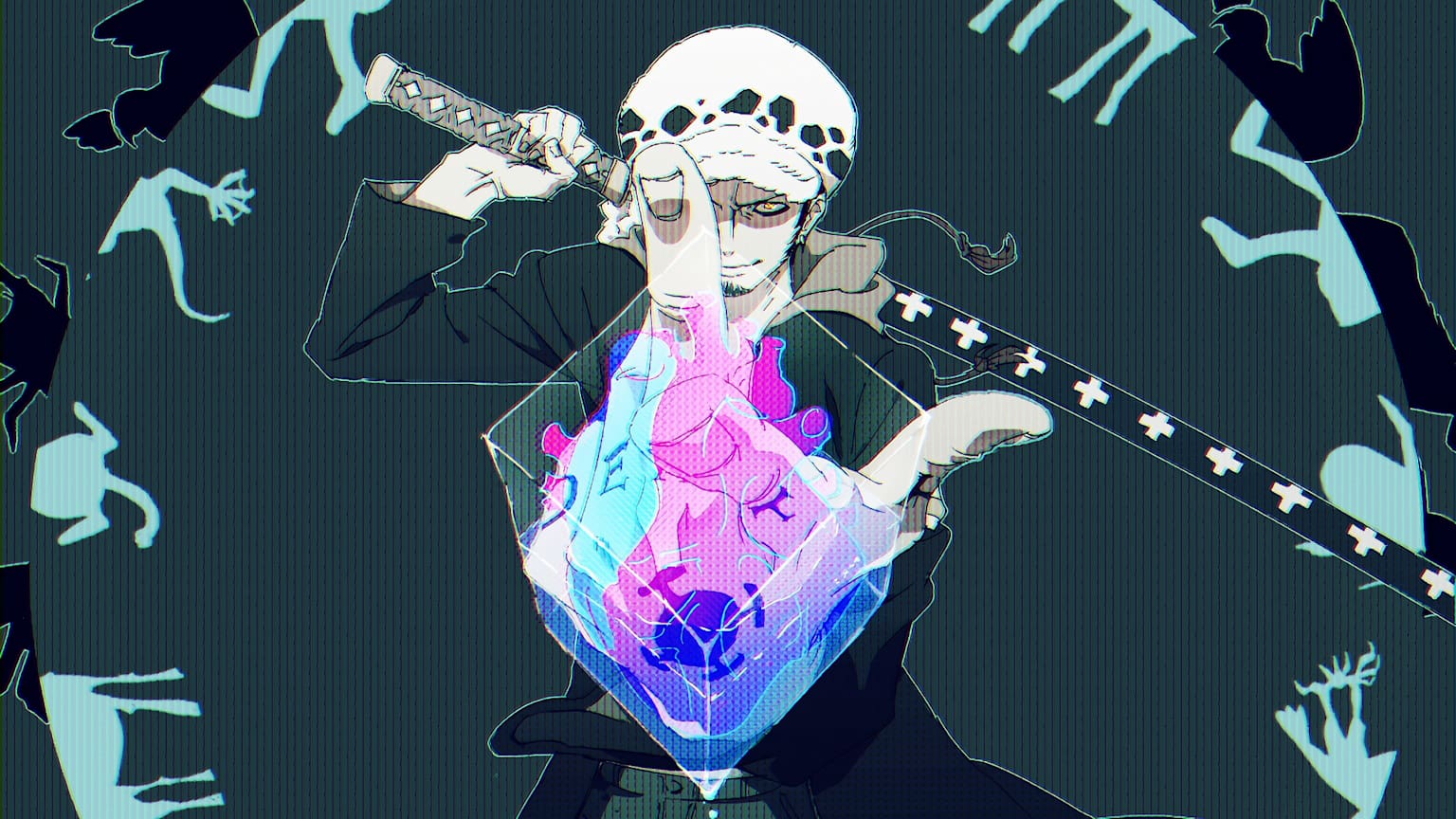
Trafalgar Law and the effect of his Ope Ope no Mi—the spatial operating room where he is absolute God.
The Ope Ope no Mi: the world's most precious Devil Fruit
The Ope Ope no Mi allows Law to create a spatial sphere called "Room," within which he has absolute control over everything inside it: he can move, cut, transpose, and change personalities. His Shambles technique allows him to exchange objects or people within his space in an instant—a tactical ability without equal. His slashing attacks (Amputate) do not cause direct wounds but dissociate bodies, allowing total control without immediate death.
But the reason the World Government—and Doflamingo in particular—wanted this Fruit at any cost is the Operation of Eternal Youth: the Ope Ope no Mi's ability to grant physical immortality to another person at the cost of its user's life. The Devil Fruit guide explains why this fruit belongs in a category of its own. Check out our One Piece figures and our collection of Devil Fruit replicas.
👉 Explore the Devil Fruits
Corazon and Law: the origin of a pirate
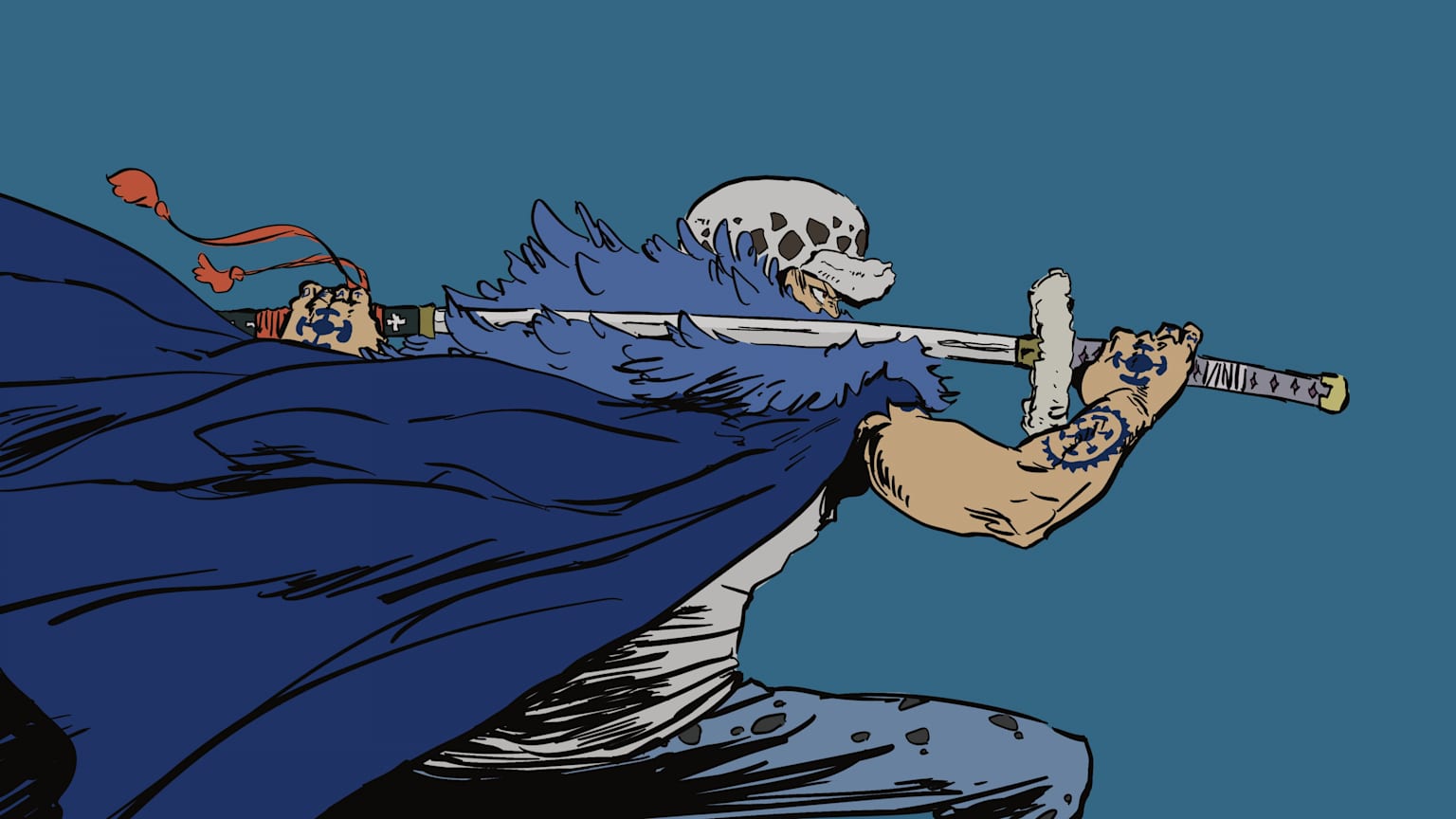
Trafalgar Law—every tattoo on his body tells the story of a condemned child who refused to die.
Law was a 10-year-old child suffering from a terminal illness (Amber Lead Syndrome) when he joined Doflamingo's crew, hoping to die in battle. That was where he met Rosinante (Corazon)—Doflamingo's younger brother, who was actually an undercover Marine agent. Corazon stole the Ope Ope no Mi to give it to Law, curing his illness. Doflamingo killed him for it.
Law's entire motivation since that day has been to avenge Corazon by destroying Doflamingo. When he achieves this in Dressrosa, with Luffy's help, his vendetta is fulfilled. What is remarkable is that Law does not fall apart afterward. He continues, finding new reasons to move forward. And his alliance with Luffy becomes something he never expected: a genuine friendship. To explore everything about the saga's alliances, see our article on the Supernovas.
👉 Explore all our One Piece figures
Law in the final saga: death or resurrection?
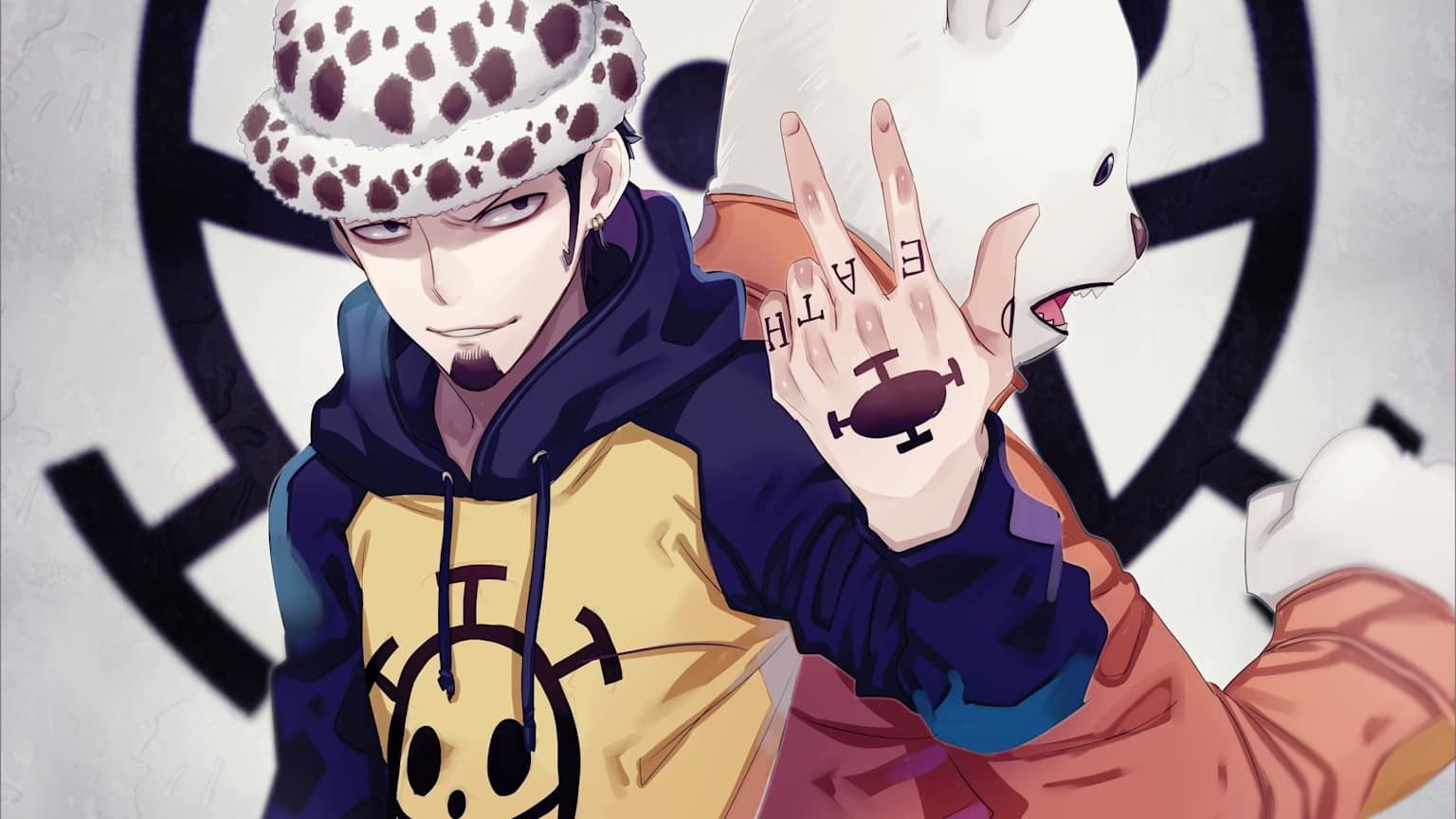
Law and Bepo—the captain and his Heart Pirates crew, a loyalty as strong as any fighting power.
After his defeat against Blackbeard, Law is presumed dead. Blackbeard stole his Ope Ope no Mi. It is a brutal narrative turn—but in One Piece, the apparent death of such a well-developed character is never final without explicit confirmation. The fan community is closely following every clue pointing to a possible return.
Even without his Devil Fruit, Law remains an elite fighter thanks to his mastery of Haki and his swordsmanship. His fate remains one of the most fascinating open questions in the final part of the story. While waiting for answers, check out our One Piece posters and our gift ideas to celebrate his journey.
👉 View our One Piece T-shirt collection
Conclusion: A doctor who chose to live
Law entered One Piece seeking death. He came out seeking something far rarer: a reason to live. Corazon gave it to him. Luffy confirmed it. And his Devil Fruit—the world's most precious—is merely a reflection of this paradox: the power to give life to someone else at the cost of his own.